

SINGLE TOOTH DENTAL IMPLANTS IN HUNTSVILLE, TX
Missing just one tooth? A single implant replaces both the root and the crown, without cutting down the healthy teeth on either side the way a bridge requires. For most patients with one missing tooth, it's the most conservative long-term option available.
WHAT IS A SINGLE TOOTH IMPLANT?WHAT IS A SINGLE TOOTH IMPLANT?
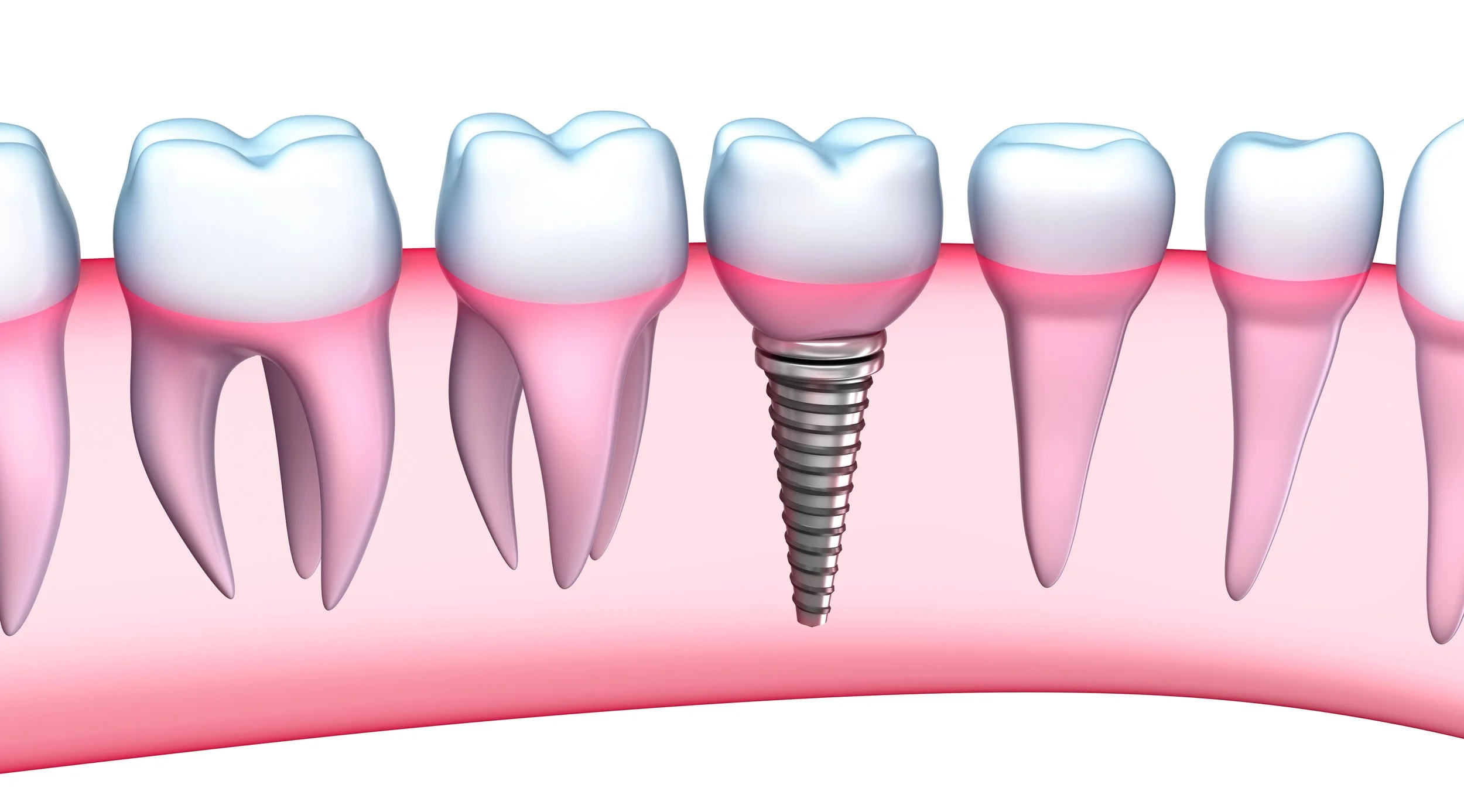
A titanium post is placed directly into the jawbone at the site of the missing tooth. Over the following months, the bone fuses to the post through a process called osseointegration, the same biological process that makes an implant as stable as a natural tooth root, per the American Dental Association. Once that's healed, a custom crown is attached on top, matched to the color and shape of your surrounding teeth.
The key difference from a bridge: nothing happens to the teeth next to the gap. They stay exactly as they are.
QUICK SUMMARY
A single tooth implant is a titanium post placed into your jawbone where the missing tooth's root used to be, topped with a custom crown. It stands on its own, no adjacent teeth are altered or involved, unlike a bridge.
IS IT RIGHT FOR YOU?ARE YOU A CANDIDATE?
A single implant isn't automatic just because you're missing one tooth, a few things matter first.
If several of these don't quite fit your situation, that doesn't rule an implant out, it just means we look closer. That's exactly what a consultation is for.
A FEW THING THAT MATTER
The missing tooth's socket has had time to heal, or the tooth was extracted with future implant placement already planned
You have enough jawbone at the site to support an implant, or you're open to a bone graft if you don't
Your gums are healthy, or any gum disease has been treated first
You're not looking to replace multiple teeth in a row, that's usually a case for multiple tooth implants or, for a full arch, All-on-X
You want a permanent, non-removable replacement rather than a partial denture
NOT EVERY TOOTH NEEDS AN IMPLANT
IS AN IMPLANT RIGHT FOR YOU?Not every gap needs a full implant right away. Sometimes a filling or a same-day crown fixes the actual problem. Other times a tooth can be saved with a root canal instead of pulled. We'd rather keep your natural tooth if it's savable. An implant only makes sense once that tooth is truly gone or already missing.
If you're missing several teeth in a row, sometimes an implant-supported denture makes more sense than several individual implants - check out All-on-X if that sounds like your situation. It really depends on your mouth, not a one-size answer.
WE USUALLY HOLD OFF WHEN
The tooth can still be treated with a filling, crown, or root canal
Active gum disease needs to get under control first
Your jawbone is too thin and hasn't been evaluated for grafting
You're not medically ready and need clearance first
A denture or bridge fits your budget and needs better
SINGLE TOOTH IMPLANT VS. A BRIDGE
IMPLANT VS. BRIDGEBoth replace one missing tooth. The difference is what happens to the teeth around it.
BRIDGE
Uses the two healthy teeth next to the gap as anchors. Getting there means grinding those teeth down to accept crowns, even if they were perfectly healthy beforehand. Sits on top of the gum and does nothing to stop the jawbone underneath from gradually shrinking over time.
SINGLE IMPLANT
Stands on its own. The teeth next to the gap are never touched. Because it's anchored in the jawbone itself, it helps preserve that bone the way a natural tooth root does.
Cost and timeline sometimes favor a bridge in the short term. But for most patients weighing a single missing tooth, the fact that an implant leaves healthy teeth alone is the deciding factor.
THE PROCESSWHAT TO EXPECT: CONSULTATION TO FINAL RESTORATION
Because it's one tooth rather than a full arch, a single implant is usually a shorter, more contained procedure than All-on-X, both the surgery itself and the sedation involved.
Step 1 - Consultation & Imaging
We check the bone at the missing tooth's site and confirm there's enough to support an implant.
Step 2 - Bone Grafting, If Needed
Not every patient needs this, but if the socket has lost density, a graft rebuilds it first. See how bone grafting works.
Step 3 - Placing the Implant
The titanium post goes into the jawbone at the missing tooth's site.
Step 4 - Healing Time
The bone needs to fuse to the implant before it can support a crown. This typically takes a few months.
Step 5 - Final Restoration
Once healed, a custom-matched crown is attached, finishing the process.
SEDATIONSEDATION FOR SINGLE TOOTH IMPLANTS
Most single tooth implant placements are well suited to lighter sedation than a full-arch case requires. Nitrous oxide keeps you relaxed while staying fully awake, and wears off quickly enough to drive yourself home. Oral conscious sedation is available if you'd prefer to be more deeply relaxed throughout. Whichever you choose, Dr. Fritsch will help you pick what fits your comfort level at your consultation.
COST & FINANCINGWHAT IT COSTS AND HOW TO AFFORD IT
A single tooth implant's cost depends on whether bone grafting is needed first and what kind of crown goes on top. The real number comes from a consultation, but here's the general approach:
We offer a very competitive rate and work to maximize your insurance reimbursement, so you get the most from whatever coverage you have, we file the claim on your behalf. We also offer flexible financing plans, so a monthly payment is often more manageable than people expect.
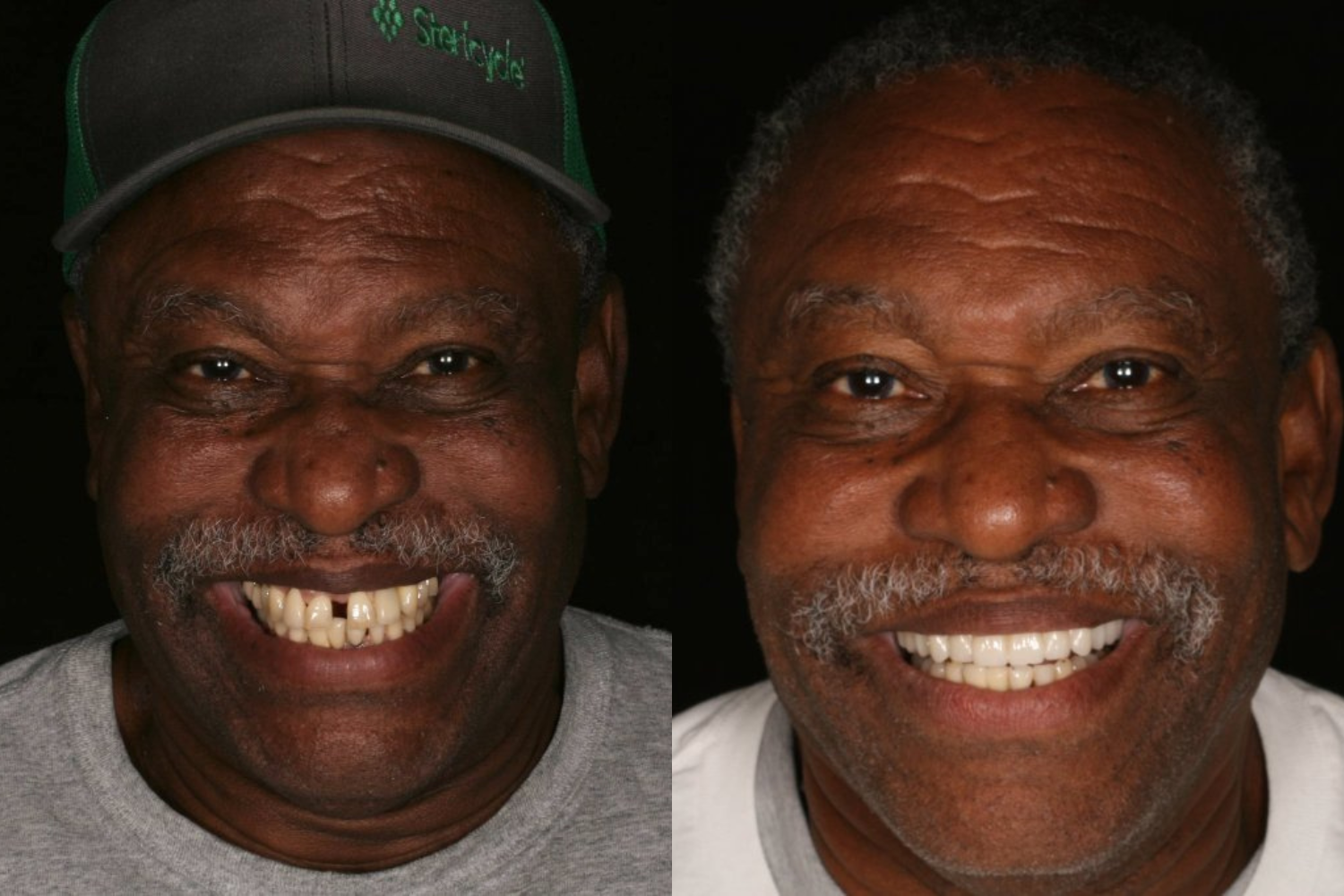
REAL PATIENT, REAL RESULT“I definitely feel more confident, not only in general but in talking, in smiling. Smiles are infectious, and I feel better now that I can share mine.””
WHY HUNTSVILLE PATIENTS CHOOSE US
10+ Years
Voted Best Dental Practice in Huntsville, consecutively
In-House
Dr. Fritsch handles consultation, placement & restoration, no referrals
Local
No drive to Houston or Dallas for implant care
WHY HUNTSVILLE CHOOSES US5.0★
and 800+ reviews, more than any other implant provider in Huntsville
PATIENT STORIESIN THEIR OWN WORDS
FAQFREQUENTLY ASKED QUESTIONS
-
No. A single implant stands on its own in the jawbone. Unlike a bridge, the healthy teeth on either side of the gap are never ground down or altered.
-
Usually a few months, most of that is healing time while the implant fuses to the bone. If you need a bone graft first, that adds time before placement can happen.
-
That's common and usually not a dead end, bone grafting can rebuild what's needed at that one site. See how bone grafting works.
-
For most patients missing one tooth, yes, mainly because it doesn't require altering healthy teeth next to the gap. A bridge can still make sense in some situations, we'll talk through your specific case.
-
Most patients are surprised by how comfortable the process is. Local anesthesia is standard, and lighter sedation options are available if you'd like to be more relaxed.
-
Yes. Consultation, imaging, placement, and the final crown all happen in-house with Dr. Fritsch, no referrals to an outside oral surgeon.
READY TO GET STARTED?
Schedule your consultation. Call (936) 291-6589 today.